



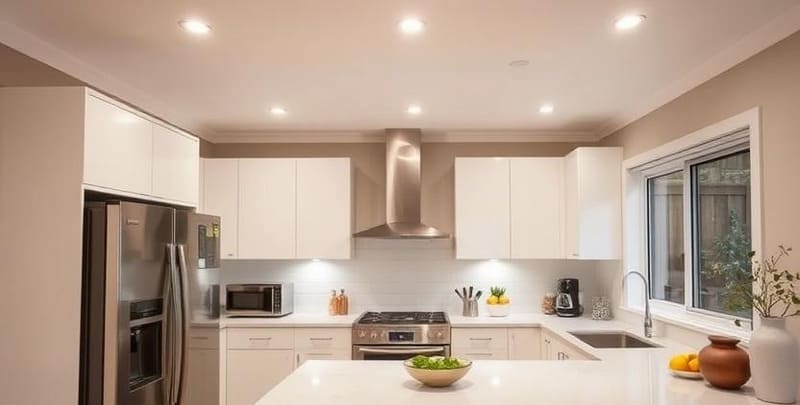
When it comes to lighting that’s sleek, efficient, and modern, nothing beats LED downlights. They’re the go-to choice for homes, offices, and commercial spaces looking for bright illumination without bulky fixtures. But with so many options out there—sizes, beam angles, color temperatures, trims, and installation types—it’s easy to feel overwhelmed. Let’s make sense of it all so we can choose the perfect LED downlights for our space.
Key Highlights
- LED downlights provide energy-efficient, long-lasting, and stylish lighting for any space.
- Choosing the right size, color temperature, and beam angle ensures proper illumination and ambiance.
- Dimmable and smart-compatible options give greater control and flexibility.
- Trim styles and finishes can enhance décor aesthetics.
- Proper placement and installation maximize lighting performance.
What Are LED Downlights?
LED downlights are recessed light fixtures installed into the ceiling to provide directed illumination. Unlike surface-mounted lights, they sit flush with the ceiling, offering a clean and modern appearance. They can light up entire rooms, highlight artwork, or provide focused task lighting—depending on placement and design.
We often see them used in kitchens, bathrooms, offices, and hallways, where a minimalist look with strong illumination is ideal.
Why Choose LED Downlights?
We’ve all seen how traditional lighting consumes more power and requires frequent bulb changes. LED downlights solve both problems beautifully.
- Energy Efficiency: They consume significantly less electricity than halogen or incandescent fixtures, helping reduce monthly energy costs.
- Long Lifespan: Most LED downlights last over 25,000 hours, minimizing maintenance.
- Low Heat Output: LEDs stay cool, keeping rooms comfortable and safe.
- Design Versatility: Available in various shapes, trims, and finishes to match every décor style.
- Eco-Friendly: LEDs don’t contain harmful substances like mercury, making them safer for the environment.
They’re not just a lighting solution—they’re a smart investment in comfort, design, and energy savings.
Types of LED Downlights
Choosing the right type depends on our lighting goals. Here are the most common options:
- Fixed Downlights: Direct light straight down—ideal for general illumination.
- Adjustable (Gimbal) Downlights: The light angle can be tilted to highlight artwork or architectural features.
- Waterproof Downlights: Perfect for bathrooms or outdoor areas where moisture resistance is essential.
- Smart LED Downlights: Can be controlled via smartphone or voice assistants for added convenience.
- Fire-Rated Downlights: Offer extra protection by maintaining ceiling integrity during a fire.
Each type serves a specific purpose, so it’s worth matching function to location for the best results.
Choosing the Right Size and Beam Angle
Size matters when it comes to LED downlights. The most common sizes are 2-inch, 4-inch, and 6-inch diameters, each serving a unique purpose:
- 2-inch or 3-inch: Ideal for accent lighting or tight spaces.
- 4-inch: Best for kitchens, hallways, and small rooms.
- 6-inch: Great for living rooms or large areas needing broad illumination.
Beam angle determines light spread:
- Narrow beam (20–40°): Perfect for spotlighting or task areas.
- Wide beam (60–120°): Better for general lighting and overall brightness.
Choosing a combination of beam angles ensures balanced illumination across the room.
Color Temperature: Setting the Mood
Color temperature, measured in Kelvin (K), affects the mood and function of a room.
- Warm White (2700K–3000K): Creates a cozy, relaxing atmosphere—great for living rooms and bedrooms.
- Neutral White (3500K–4100K): Offers balanced lighting for kitchens and bathrooms.
- Cool White (5000K–6500K): Delivers crisp brightness ideal for offices and workspaces.
By matching color temperature with purpose, we can create environments that feel just right—whether it’s relaxing after a long day or focusing on tasks.
Trim Styles and Finishes
Trim styles play a huge role in both function and aesthetics. Here are popular choices:
- Baffle Trim: Reduces glare and softens light—ideal for living areas.
- Reflector Trim: Boosts brightness—perfect for high ceilings or commercial use.
- Adjustable Trim: Allows precise aiming for accent lighting.
- Square Trim: A modern alternative to traditional round trims.
- Decorative Trim: Adds personality with metallic or color finishes.
We can match trim finishes—white, black, brushed nickel, or bronze—to our décor for a seamless look.
Dimmable and Smart Options
Lighting isn’t just about brightness—it’s about control. Dimmable LED downlights let us adjust light levels for different moods or times of day, while smart downlights take convenience to another level.
With smart control, we can change brightness, color, and even set schedules through mobile apps or smart assistants like Alexa or Google Home. It’s efficiency paired with modern comfort.
Installation Considerations
Installing LED downlights requires proper planning. Here’s what to keep in mind:
- Ceiling Type: Ensure compatibility with drywall, drop ceilings, or plaster.
- Clearance Space: Allow room for heat dissipation and electrical connections.
- Wiring and Dimming: Use compatible dimmers to prevent flickering.
- IC-Rated Fixtures: For insulated ceilings, choose IC-rated models to prevent overheating.
Hiring a licensed electrician is often the best route to ensure safe and efficient installation—especially for multiple fixtures.
How Many LED Downlights Do We Need?
As a general rule, one 4-inch downlight covers about 4–6 square feet, while a 6-inch downlight covers around 8–10 square feet. Spacing them evenly across the ceiling ensures uniform lighting.
In kitchens or bathrooms, spacing can be tighter for focused illumination. For living rooms, a balanced grid pattern works best. Planning the layout ahead saves time and ensures the right brightness across the space.
Energy Savings and ROI
One of the biggest reasons people switch to LED downlights is long-term savings. Compared to halogen or incandescent lights, LEDs use up to 85% less energy and last up to 20 times longer.
That means lower utility bills, fewer replacements, and a smaller environmental footprint. Over time, the savings easily outweigh the initial cost of installation.
Maintenance Tips
LED downlights require minimal upkeep, but a few simple practices can keep them performing at their best:
- Clean trim and lenses regularly to prevent dust buildup.
- Avoid harsh chemicals when cleaning; use a soft cloth.
- Check wiring and dimmer compatibility if flickering occurs.
- Replace only with recommended bulbs or drivers to ensure safety.
Regular maintenance helps maintain both brightness and efficiency over time.
Where to Buy Quality LED Downlights
We should always choose high-quality LED downlights from trusted brands that meet safety standards like Energy Star and UL certification. Look for options that balance brightness, efficiency, and design.
Buying from reputable lighting suppliers ensures we get durable products with warranty support, proper specifications, and the latest energy-saving technology.
Final Thoughts
LED downlights are more than just ceiling lights—they’re a complete lighting solution that balances efficiency, performance, and style. By choosing the right size, trim, and brightness, we can create spaces that feel comfortable, functional, and beautifully lit for years to come.
Whether we’re upgrading a single room or planning a whole-home lighting project, investing in high-quality LED downlights is a bright decision that pays off in every sense.
FAQs
- Are LED downlights worth the cost?
Absolutely. While the upfront cost may be higher than traditional lights, the long lifespan and energy savings make them a cost-effective choice over time. - Can LED downlights be dimmed?
Yes, most modern LED downlights are dimmable, but they require compatible dimmer switches to work smoothly without flickering. - How long do LED downlights last?
High-quality LED downlights typically last between 25,000 to 50,000 hours, depending on usage and quality. - Are LED downlights safe for insulated ceilings?
Yes—just make sure they are IC-rated. These fixtures are designed for safe use in insulated ceilings without overheating. - Can I install LED downlights myself?
While DIY installation is possible, hiring a licensed electrician is safer and ensures compliance with electrical codes, especially for multiple fixtures or new wiring.
