



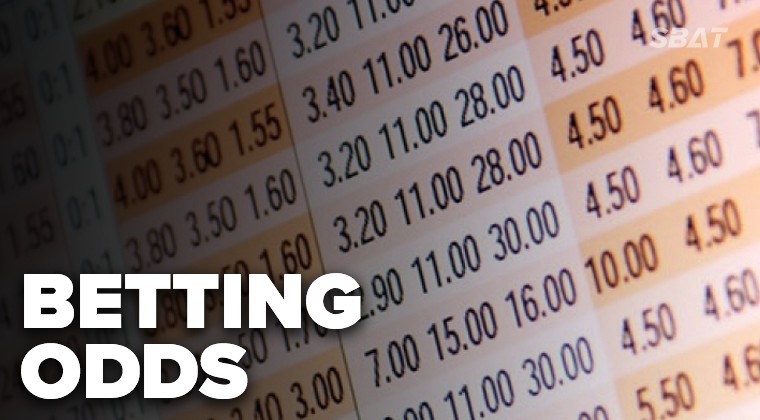
Betting odds often look confusing at first glance, especially when you’re new to sports betting or just trying to understand how predictions work. But once you break them down, they’re actually quite simple and logical.
Contents
ToggleThis becomes even more important when looking ahead to major tournaments like the FIFA World Cup 2026, where millions of people will be following predictions, favorites, and underdogs. Understanding odds will help you interpret expectations clearly rather than guessing what the numbers mean.
What Betting Odds Actually Mean
At their core, betting odds show two key things:
- How likely an outcome is expected to happen
- How much you can win if your prediction is correct
In simple terms, odds are a balance between probability and payout. The lower the risk (more likely an outcome), the lower the potential reward. The higher the risk (less likely outcome), the higher the reward.
The Three Main Types of Betting Odds
1. Decimal Odds (Easiest to Understand)
Decimal odds are the most straightforward format.
- Example: 2.50
- Meaning: If you bet 1 unit, you get 2.50 back (including your stake)
So, a higher number means a bigger payout, but usually a less likely outcome.
2. Fractional Odds (Common in the UK)
Fractional odds look like this: 5/1 or 2/3
- First number = profit you win
- Second number = stake you risk
Example:
- 5/1 means you win 5 units for every 1 unit bet
- 2/3 means you must bet 3 units to win 2 units
This format is slightly more mathematical but still widely used in sports betting.
3. Moneyline Odds (Popular in the US)
Moneyline odds use positive and negative numbers:
- Positive (+200): You win $200 on a $100 bet
- Negative (-150): You must bet $150 to win $100
Negative numbers indicate favorites, while positive numbers show underdogs.
The Easiest Way to Read Betting Odds Quickly
If you want the simplest approach, just remember this:
- Lower odds = more likely to happen, smaller profit
- Higher odds = less likely to happen, bigger profit
You don’t need to memorize formulas. Just focus on the relationship between risk and reward.
A quick mental trick:
- If the number looks small, it’s probably a favorite
- If the number looks big, it’s probably an underdog
Common Mistakes Beginners Make
Many beginners misread odds by assuming:
- Higher odds always mean “better chance of winning money” (not true)
- Odds predict certainty (they only estimate probability)
- A favorite will always win (upsets happen often in sports)
Understanding odds is about interpreting probability—not guaranteeing results.
Applying It to Betting on the 2026 World Cup
When it comes to แทงบอลโลก 2026, odds will constantly shift as teams qualify, form changes, and injuries happen. Strong teams like Brazil, France, or Argentina will typically have lower odds because they are considered more likely to win matches or the tournament.
Underdog teams will have higher odds, meaning they are less likely to win—but offer higher payouts if they do.
So instead of just picking randomly, reading odds helps you understand:
- Who is favored to win
- How risky a prediction is
- What kind of return is being offered
This makes watching the tournament more strategic and engaging, rather than purely emotional.
Final Thoughts
Reading betting odds doesn’t need to be complicated. Once you understand the basic idea of probability versus payout, everything becomes much clearer. Whether you’re looking at a simple match or thinking ahead to Betting on the 2026 World Cup, the same logic applies everywhere.
