



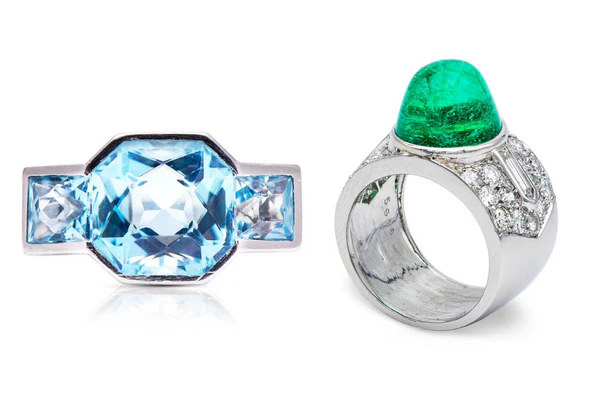
Few jewelry styles have aged as gracefully as the geometric brilliance of the early twentieth century. Art deco engagement rings remain one of the most sought-after categories in estate jewelry, prized for their architectural precision, hand-finished craftsmanship, and unmistakable sense of glamour. Whether you are shopping for a one-of-a-kind proposal piece or building a serious collection of period jewelry, understanding the design language of this era will help you spot a genuine treasure and avoid an expensive mistake.
A Brief History of the Era
The art deco movement emerged between roughly 1920 and 1935, taking its name from the 1925 Exposition Internationale des Arts Décoratifs et Industriels Modernes in Paris. It was a deliberate break from the soft, organic curves of art nouveau and edwardian jewelry that came before. Designers embraced symmetry, contrast, and the optimism of the machine age. Skyscrapers, cubist painting, and Egyptian motifs (popularized after the 1922 discovery of Tutankhamun’s tomb) all left their mark on the engagement rings of the period.
Defining Design Hallmarks
Authentic period pieces share a recognizable visual vocabulary:
- Geometric symmetry. Hexagons, octagons, lozenges, and stepped silhouettes replaced the round and oval profiles of earlier decades.
- Filigree and milgrain. Lacy openwork and finely beaded edges added texture without bulk, allowing more light to enter the stones.
- Platinum settings. Platinum became the metal of choice for its strength and white sheen, which let diamonds appear larger and brighter.
- Calibré-cut accents. Small, custom-cut colored stones, often sapphires, emeralds, rubies, or onyx, were fit precisely into channels to create bold contrast against white diamonds.
Gemstones and Cuts You Should Expect to See
While brilliant rounds existed, the period favored cuts that complemented its geometry. Old european cuts, transitional cuts, asscher cuts, and emerald cuts were typical center stones. Marquise, baguette, and trillion accents framed those centers. Colored gems were not unusual as the main stone, particularly sapphires and emeralds, lending character that modern mass-produced rings rarely match.
How to Authenticate an Original Piece
Reproductions are common, so several markers separate genuine period rings from later copies:
- Hand-fabricated construction. Look for slight irregularities in the milgrain and filigree under magnification. Machine-cut perfection often signals a modern reproduction.
- Period-appropriate hallmarks. Platinum stamps, maker’s marks, and country-of-origin marks (such as the French dog’s head for platinum) help date and authenticate a piece.
- Stone cuts that match the era. A ring claimed to be from 1925 but set with a modern brilliant cut is almost certainly a later restoration or reproduction.
- Wear consistent with age. Soft wear on the gallery, the back of the shank, and the prong tips should match a ring that has lived for a century. Pristine condition can be a red flag rather than a selling point.
Why These Rings Continue to Captivate
For engagement shoppers, the appeal is partly aesthetic and partly emotional. A ring made in 1928 carries a history that no new piece can replicate. The work was performed by hand, often by jewelers who trained for years in workshops in Paris, New York, and London. For collectors, the era represents one of the high water marks of bench jewelry, and prices have steadily appreciated for signed pieces from houses like Cartier, Van Cleef and Arpels, Tiffany and Company, and Oscar Heyman.
There is also a sustainability argument that resonates with modern buyers. Choosing a piece that already exists, rather than commissioning new mining and manufacturing, is a quietly responsible decision. The ring you wear has a story, and you become part of its next chapter.
Practical Considerations Before You Buy
Before committing to any significant purchase, verify the following with the seller:
- A written appraisal or independent grading report for the center stone.
- A return policy that allows for outside gemological review.
- Disclosure of any restorations such as reshanking, new prongs, or replaced accent stones.
- Sizing guidance, since adjusting platinum filigree is delicate work that should only be performed by a specialist.
Reputable estate jewelers stand behind their attributions and welcome scrutiny. If a seller resists detailed questions about provenance, that is your answer.
Find a Ring Worth Wearing for the Next Hundred Years
A century after they first appeared in storefront windows along Fifth Avenue and the Place Vendôme, these rings continue to outperform contemporary designs in both style and substance. For shoppers who want a piece with genuine character, working with a dedicated estate specialist makes all the difference. Gesner Estate Jewelry maintains a carefully curated inventory of authenticated period rings, each accompanied by detailed provenance and expert evaluation. Browse the collection today to find a piece that will still feel just as compelling a century from now.
