



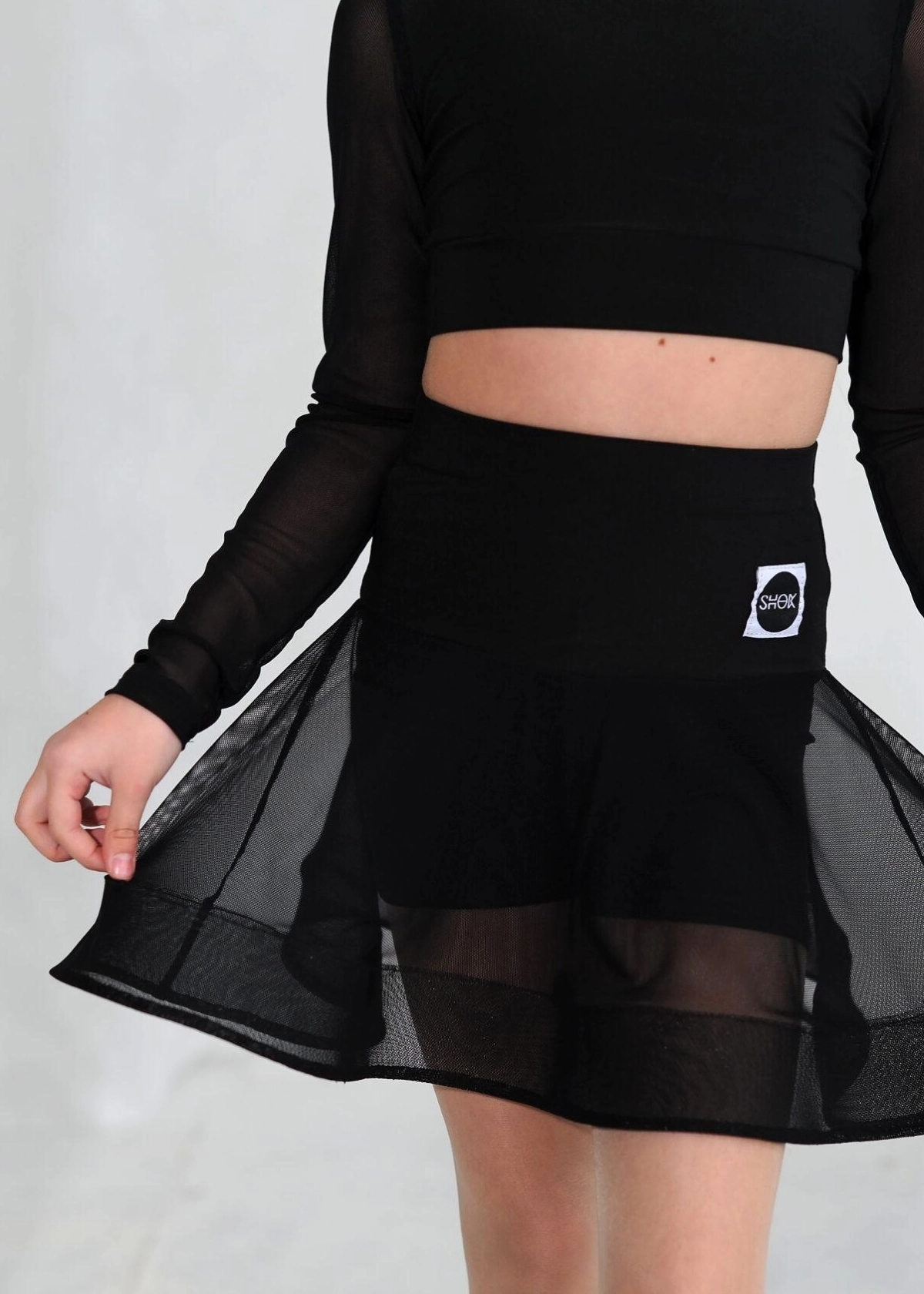
Few pieces of dancewear earn their place in a dancer’s drawer the way the black dance top does. It works for every class on the schedule, photographs cleanly on social media, performs under stage lighting, and pulls double duty for warm-ups, cross-training, and conditioning. For dancers and the people who outfit them, knowing what to look for in a black dance top is a small investment that pays off across years of training and performance.
Why Black
Instructors recommend black for several practical reasons. Black creates clean lines across a body in motion, which makes it easier for the dancer and the instructor to see the shape of the position being worked. In group settings, a studio that asks for black tops establishes visual uniformity that helps both teaching and self-correction. Under stage lighting, black absorbs rather than reflects, allowing the dancer’s movement and face to take focus. And in the practical day-to-day of training, black hides sweat and dust, holds its color through repeated washing, and pairs effortlessly with any tights, leggings, or shorts a class might call for.
Key Features to Look For
Not every black top performs equally on a dancer’s body. Several features separate a serious dancewear piece from a generic athletic top:
- Fabric. Look for a four-way stretch knit with strong recovery, breathable enough for hour-long technique classes and substantial enough to hold its shape through repeated wear. Cotton-spandex blends, nylon-spandex blends, and high-quality polyester knits are common.
- Fit. A dance top should move with the body without riding up during inversions, lifts, or floor work. Try the top in pliés, port de bras, and a few rolls before committing.
- Neckline. Crew, scoop, V-neck, halter, mock-neck, and off-the-shoulder cuts each suit different aesthetics and styles. Audition coaches often have specific preferences worth checking before a major call.
- Length. Cropped, regular, and tunic lengths each carry different functional and stylistic implications. Cropped is common for jazz and contemporary; regular suits ballet and modern; longer cuts work for warm-ups and street wear.
- Sleeve coverage. Tank, cap, short, three-quarter, and long-sleeve options should all rotate through the wardrobe to cover seasonal and aesthetic needs.
- Mobility. Raglan seams, princess seams, and underarm gussets reduce binding through the shoulder. A well-constructed shoulder is invisible until you reach overhead and notice it does not pull.
Style Variations Worth Keeping in Rotation
The black dance top is not a single garment but a category. A complete dancer’s wardrobe usually includes several variations:
- A fitted black tank for technique classes and conditioning.
- A loose-cropped black tee for warm-ups, choreography sessions, and casual studio time.
- A long-sleeve black top for cooler studios and outdoor cross-training.
- A black halter or strappy-back top for performance and audition aesthetics.
- A black leotard-style top for ballet and traditional technique.
The right combination depends on the dancer’s training schedule, the styles they study, and any studio dress code that applies.
Matching the Top to the Use Case
A few quick rules help match the right piece to the right setting. For technique classes that prioritize line, choose a fitted top with a clean silhouette and minimal embellishment. For auditions, follow the audition notice precisely and default to fitted, plain, and well-tailored over anything decorative. For performance, the top is usually part of the costume design and dictated by the choreographer. For warm-ups, conditioning, and cross-training, dancers can prioritize comfort and personal style. For studio rehearsals and choreography development, freedom of movement matters more than aesthetic precision.
Care and Longevity
Quality dancewear lasts when it is treated like the technical garment it is. Wash in cold water on a gentle cycle, avoid fabric softeners that break down elastane, and lay flat or hang to dry rather than tumbling on high heat. Black fabrics in particular hold their depth of color longer when washed inside out and kept out of direct sunlight when drying. With reasonable care, a quality black dance top should hold its shape and color for several seasons of regular use.
Where to Find Performance-Quality Black Dance Tops
For dancers, parents, and studios looking to build a wardrobe around a high-performing core piece, Tiger Friday offers a full range of black dance tops designed for the technical and aesthetic demands of serious training. Browse the collection to find the silhouettes, fabrics, and cuts that fit your dancer’s schedule, style preferences, and studio requirements.
