



Few areas of professional training generate as much confusion as online CPR certification, largely because the term gets used loosely across a market with wildly different course structures. Some of that confusion comes from providers themselves, and some comes from outdated assumptions that no longer reflect how modern certification actually works. Separating fact from myth can save considerable time, money, and frustration before enrolling in any course.
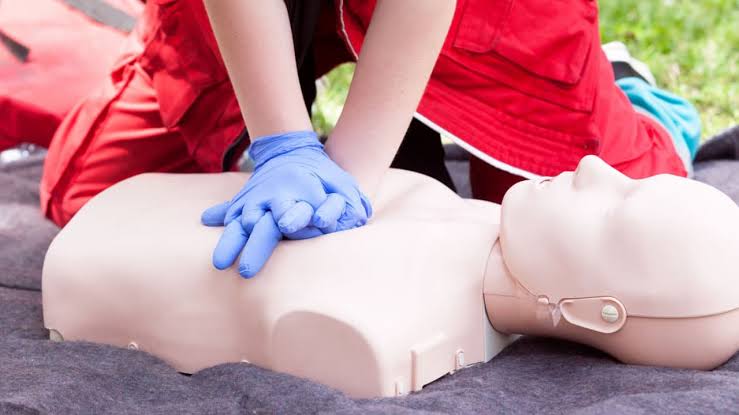
The first and most persistent myth is that online CPR certification means a certificate can be earned entirely from a couch with no physical demonstration required. While some providers do offer this, a fully online course without any hands-on skills component generally does not satisfy workplace compliance requirements in healthcare, childcare, fitness, or education settings. Regulators consistently require verifiable proof that a certified individual can physically perform chest compressions at the correct depth and rate, position their hands correctly, and operate an AED. This is precisely why reputable providers build their online courses around a blended model, pairing online theory with a required in-person or supervised virtual skills assessment. Assuming “online” automatically means “no hands-on component required” is the single most common and costly misunderstanding in this space.
A second common myth is that online certification is inherently lower quality than in-person classroom training. In reality, a well-designed online course often covers the same curriculum, aligned with American Heart Association or Red Cross guidelines, using the same core content, just delivered through video, interactive modules, and self-paced quizzes rather than a lecture format. The meaningful difference is not the medium but whether the course includes proper skills verification. A blended course pairing solid online instruction with a rigorous hands-on assessment can be just as rigorous, and sometimes more consistent, than a rushed in-person class covering the same material in a single sitting.
Another widespread misconception is that online certification takes significantly longer to complete than in-person training. In practice, the opposite is often true. A properly structured online theory component typically takes about an hour to ninety minutes, and pairing it with a scheduled hands-on session, sometimes as short as thirty minutes for the skills check, is frequently faster overall than blocking out an entire day for traditional classroom instruction. This efficiency is part of why online and blended formats have become so popular among busy healthcare professionals, childcare staff, and fitness instructors juggling demanding schedules.
Some people also assume that any certificate labeled “CPR certified” will be accepted anywhere, regardless of the issuing organization. This is not accurate. Employers, licensing boards, and regulatory agencies generally expect certification aligned with recognized national standards, and a certificate from an unfamiliar or unaccredited provider can be rejected even if the training itself was reasonably thorough. Checking that a course explicitly states its alignment with a recognized standard, and confirming that the certificate includes some form of verifiable proof such as a digital ID or code, avoids this pitfall entirely.
A final myth worth addressing is the belief that once certified, no further action is needed for years without exception. CPR certification always carries an expiration date, generally every two to three years depending on the certifying body and region, and renewal is not optional for maintaining valid, compliant certification. Some providers offer cost-saving options, such as paying once for unlimited future renewals, but this affects the cost of staying certified, not the underlying requirement to actually complete each renewal cycle on schedule.
Cutting through these myths comes down to understanding one central point: online CPR certification is a legitimate, often more efficient path to genuine certification, provided the course includes proper hands-on skills verification and aligns with recognized standards. Healthcare professionals, childcare and education workers, fitness and wellness professionals, and caregivers looking for accurate, properly structured certification can find blended learning courses built around real compliance requirements through Simple CPR, where clarity and genuine standards take priority over convenient-sounding shortcuts.
