



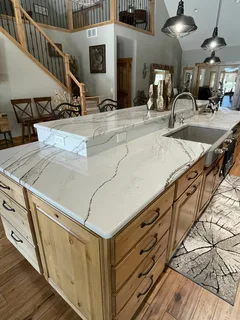
Choosing a quartz countertop involves more than selecting a color, pattern, and slab thickness. Quartz countertop edge profiles can significantly influence how a kitchen or bathroom looks, feels, and functions. The right edge can make a countertop appear sleek and contemporary, soften the visual lines of a space, or introduce a more traditional architectural character.
For homeowners, designers, and remodeling professionals, understanding countertop edge options before fabrication can make the design process more intentional. HanStone Quartz from Hyundai L&C offers several edge profile choices, ranging from understated profiles to more decorative designs.
Why Quartz Countertop Edge Profiles Matter
A countertop edge is one of the most noticeable details at eye level. Although it may occupy only a small portion of the overall surface, its shape can affect the character of an entire room.
A simple edge can allow a dramatic quartz pattern to remain the focal point. A more detailed profile can complement traditional cabinetry, decorative hardware, or architectural elements.
Edge selection also influences the way a countertop feels during everyday use. Rounded profiles can create a softer transition, while angular edges can reinforce a modern design aesthetic.
The best choice depends on more than appearance. Consider:
- Kitchen or bathroom design style
- Cabinet profiles and hardware
- Countertop thickness
- Island size and shape
- Frequency of daily use
- Desired visual impact
- Overall architectural style
Thinking about these factors together creates a more cohesive result.
Popular Quartz Edge Styles to Consider
Different quartz countertop edge profiles create different visual impressions. Understanding the distinctions makes it easier to communicate preferences with a designer, fabricator, or dealer.
Eased Edge
An eased edge is one of the more understated options. The profile maintains the visual simplicity of the slab while adding a slight rounding to the top edge.
This style works particularly well in contemporary, transitional, and minimalist kitchens. It allows the quartz color and pattern to remain prominent without introducing a highly decorative detail.
Beveled Edge
A beveled edge introduces a clean, angled detail along the countertop perimeter. The geometric transition can complement modern cabinetry and spaces where crisp architectural lines are part of the design language.
A bevel can also create a subtle highlight along the edge, making the countertop profile more noticeable without becoming overly ornate.
Bullnose Edge
A bullnose profile uses a rounded shape to create a smooth, welcoming appearance. It can work well in kitchens where softer visual transitions are preferred.
Because the profile has a more traditional appearance than a sharp linear edge, it can pair naturally with classic cabinetry and warmer interior styles.
Knife Edge
A knife edge creates a dramatic, streamlined appearance by tapering visually toward the perimeter. It can make a countertop appear thinner and more sculptural.
This profile can be particularly effective on islands or other areas intended to serve as a visual centerpiece. However, the surrounding design should be considered carefully so the edge complements rather than competes with the rest of the room.
Roman and Reverse Ogee Edges
For homeowners seeking a more decorative treatment, profiles such as Roman and reverse ogee introduce additional shaping along the countertop perimeter.
These styles can suit traditional or formal interiors where cabinetry, millwork, and architectural detailing already have a strong presence.
How to Choose the Right Quartz Countertop Edge Profile
There is no single edge profile that suits every project. A practical selection process starts with the overall design rather than the countertop alone.
1. Match the Architectural Style
Start by looking at the room as a whole.
A minimalist kitchen may benefit from a clean eased or beveled edge. A traditional kitchen with detailed cabinetry may accommodate a more decorative profile. Transitional spaces can often support either direction, depending on the other finishes.
The objective is visual consistency.
2. Consider the Countertop’s Role
Not every countertop needs the same level of visual emphasis.
A large kitchen island may benefit from an edge that creates a distinctive focal point. A perimeter countertop may work better with a simpler profile that allows cabinetry, backsplash materials, or lighting to receive more attention.
Think about where the eye naturally travels through the room.
3. Look at the Quartz Pattern
Quartz with pronounced veining, movement, or contrast can already make a strong statement. In these situations, a restrained edge may help preserve visual balance.
For quieter quartz colors, a more distinctive edge can add another layer of character without overwhelming the space.
4. Consider Everyday Use
Countertops are working surfaces, not just decorative features. Consider how people move around the kitchen, where children may gather, and how frequently the countertop edge will be touched.
A rounded profile can create a softer transition in high-traffic areas, while a more angular profile may suit spaces where a crisp, architectural appearance is the priority.
Quartz Countertop Edge Profiles and Slab Thickness
Edge selection should also be considered alongside slab thickness. The apparent proportion of a countertop can change depending on the relationship between the surface and its edge.
Fabricators can also use specific construction and fabrication techniques to achieve particular visual effects. Hyundai L&C provides fabrication resources and specifications for professionals working with HanStone Quartz, emphasizing the importance of proper fabrication details during installation.
That makes early communication especially important. A homeowner may have a particular edge style in mind, but the final result also depends on the selected material, thickness, countertop dimensions, fabrication requirements, and installation details.
See Quartz Edge Options Before Making a Final Decision
One of the most useful steps is seeing actual edge samples. Digital images can communicate the general appearance of a countertop, but physical samples provide a better sense of scale, shape, and finish.
The HanStone Quartz collection includes multiple edge profile options, including eased, beveled, bullnose, knife, Roman, reverse ogee, ellipse, and roundover profiles. Viewing these choices alongside quartz colors and cabinetry can make comparisons much easier.
The collection also includes a wide range of colors and design options, giving homeowners flexibility when coordinating the countertop surface with the rest of the interior.
Final Considerations for Quartz Countertop Edges
A countertop edge may seem like a small finishing detail, but the right profile can strengthen the overall design of a kitchen or bathroom. Quartz countertop edge profiles range from the clean geometry of a beveled edge to the softness of a bullnose or the sculptural character of a knife edge, with each option creating a different visual experience.
The most effective selection considers the entire space, including cabinetry, quartz pattern, countertop thickness, traffic patterns, and personal design preferences. Reviewing edge samples with a qualified dealer or fabricator can also help turn a design concept into a finished countertop that feels intentional from every angle.
For inspiration and additional information about HanStone Quartz, explore the collection and edge profile options from Hyundai L&C.
