


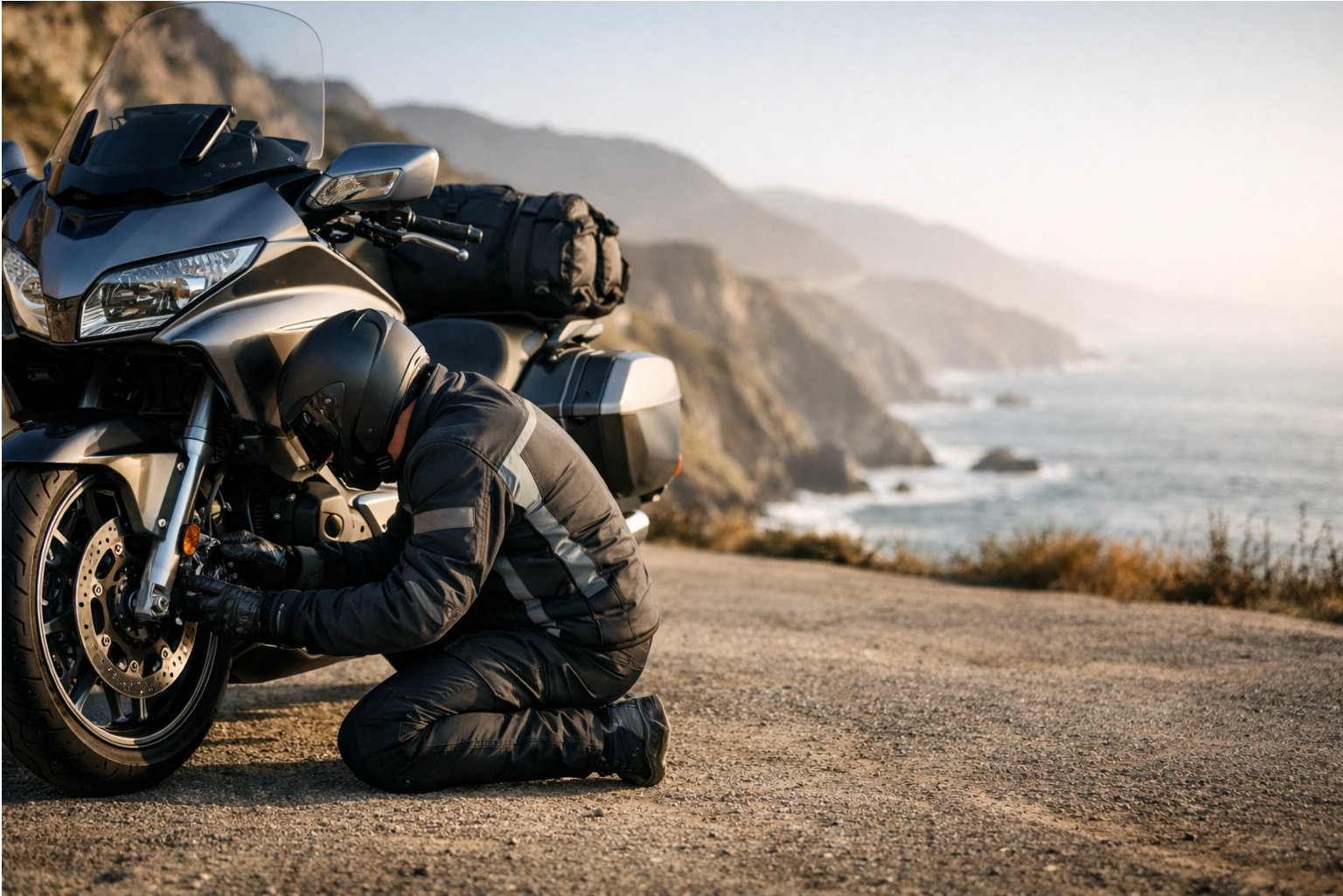
When you happen to be riding along the Pacific Coast Highway on a loaded touring motorcycle, the only thing you cannot afford to cut corners on is the brakes. Yet, after covering many miles with different touring bikes, I have come to know that brake performance is not only about safety, but also about confidence on every trip.
Understanding the Special Braking Requirements of Touring Motorcycles
Touring motorcycles have a totally different braking challenge compared to their lighter counterparts. A full-fledged Honda Goldwing alone may weigh more than 900 pounds without anyone onboard, not to mention a passenger, luggage, and camping baggage. Such a huge mass needs strong stopping force, and that is where quality touring bike brakes become essential.
The physics are simple but challenging.
Touring bikes carry more weight, so they take longer to stop. They also create more heat during braking and put intense stress on braking system components. My last trip through the Rockies was an eye-opener, showing how low-quality brake parts wear out during long downhill runs. This is exactly the kind of situation OEM parts are designed to handle.
Why Original Equipment Manufacturer Components Matter
The market has millions of aftermarket brakes that claim to be superior and less expensive. Still, there is strong value in choosing genuine OEM brake components in many cases, especially for luxury touring motorcycles such as the Honda Goldwing.
These parts go through thorough testing that simulates real touring conditions, including constant high-speed braking and extreme temperature changes.
Authentic touring brakes are made with exact requirements based on the weight-bearing and handling needs of each model. When Honda engineers design braking systems for Goldwings, they consider:
- The center of gravity of the bike
- Normal load configurations
- Built-in ABS systems
- How all brake components work together as one unit
This careful engineering improves performance, consistency, and overall control.
Key Components That Shape Brake Performance
A braking system has several linked parts, and each one plays a critical role in overall performance.
Brake Pads
Brake pads are the first point of contact for stopping power. Quality touring bike pads use high-friction materials that stay consistent across a wide range of temperatures.
I have observed that true OEM Goldwing brake pads often use compounds that resist glazing and fading, two issues that can affect lower-quality options over long rides.
Brake Rotors
Brake rotors must handle high heat while staying stable in shape and thickness. Many high-quality touring motorcycles use dual or even triple rotor arrangements on the front wheel, since most braking happens at the front.
Rotor design matters a lot, including:
- Ventilation patterns
- Metallurgy and build quality
- The ability to resist warping and overheating
These factors directly affect how well your bike slows down during demanding rides.
Brake Fluid and the Hydraulic System
Brake fluid is often overlooked, but it is one of the most important parts of a hydraulic braking system. It carries pressure from the lever to the calipers, making braking possible.
Over time, brake fluid absorbs moisture from the air. This reduces performance and can lead to dangerous brake fade, where overheated fluid begins to boil.
Regular fluid changes using the recommended DOT rating help maintain:
- A firm brake feel
- Reliable pressure delivery
- Safer performance on long downhill stretches
When Replacement Becomes the Only Solution
Touring bike brakes are built for durability, but they still need replacement over time. Knowing the warning signs helps prevent problems in the middle of a long trip.
One common sign is unusual noise during braking, such as:
- Grinding
- Squeaking
- Scraping metal sounds
This usually signals worn brake pads that may have reached their minimum thickness.
Another key warning sign is a change in brake lever feel. If your brake lever pulls closer to the handlebar than before, or feels spongy instead of firm, it may require urgent action.
On a cross-country trip last summer, I noticed the rear brake lever had started to feel loose. After inspection, it turned out the pads were worn and the brake fluid was contaminated. I dealt with it immediately by replacing the parts with genuine components.
There are also visual indicators to watch for.
Rotors should be smooth and evenly surfaced. If you notice scoring, warping, or discoloration, replacement may be overdue. Brake pads should also wear evenly. Uneven wear patterns may point to caliper or rotor issues that need professional diagnosis.
The Real-World Payback of Quality Brake Components
The value of quality brake components goes beyond basic safety. Consistent braking force builds confidence, especially during emergency maneuvers.
When road debris appears or a sudden road change forces quick action, reliable braking helps you react without hesitation. That allows you to focus on the ride instead of worrying about equipment performance.
Another major advantage of genuine OEM parts for Goldwings and other touring bikes is longevity. While quality parts may cost more upfront, they often last longer and perform better across their full lifespan.
High-quality brake pads usually outlast low-cost ones, and they deliver more stable performance over time without major drop-offs.
Brake Lifespan Maximizing Maintenance Practices
Proper maintenance does more than extend brake life. It keeps performance predictable and smooth.
Frequent cleaning removes brake dust, road dirt, and corrosive buildup that forms during normal riding. As part of my regular routine, I inspect my brakes during major service intervals and check:
- Pad thickness
- Rotor condition
- Brake fluid levels
Brake Fluid Replacement Matters Most
Brake fluid replacement deserves extra attention. Most manufacturers suggest a full brake fluid change at least twice within two years, even if mileage is low.
This prevents moisture contamination, which lowers the boiling point and increases corrosion inside the system. Using the correct DOT specification fluid also ensures compatibility with brake seals and components.
Making Informed Choices on Brake Upgrades
When it is time to replace worn parts, many riders face the choice between OEM and aftermarket options. With touring motorcycles, especially advanced models like Goldwings that use ABS and linked braking systems, OEM parts provide a compatibility guarantee that many aftermarket products cannot fully match.
Modern touring bikes rely on integrated electronics that interact closely with braking components. That means the system often requires precise specifications to perform safely and consistently.
Frequently Asked Questions
What is the best inspection frequency for touring motorcycle brakes?
A professional inspection is recommended at least every 10,000 miles. Riders should also check their brakes every 5,000 miles, especially if they ride in mountainous areas or carry heavy loads, since those conditions can speed up wear.
Why are touring bike brake requirements different from sport bikes?
Touring bikes carry heavier loads and travel longer distances. That creates longer periods of heat buildup and demands brake components that are designed for durability and consistency. Sport bikes focus on strong stopping power in short bursts, while touring brakes are built to resist fading across long rides.
Is it risky to mix brands of brake components?
Modern braking systems are designed to work as integrated units. Mixing brands can create unpredictable results, especially on bikes with ABS or linked braking systems. Using genuine OEM parts helps ensure everything works as engineers intended and maintains safety margins and warranty protection.
Final Thoughts
The most important safety mechanism on your touring motorcycle is your brakes. When you understand how they work, know when service is needed, and choose quality components, you protect both your safety and your confidence on the road. Every journey runs better when it can end as safely as it begins.
