



The fourth day of your Moroccan journey begins in the ochre-toned city of Taroudant to Essaouira often called “Little Marrakech” for its impressive ramparts and traditional character. Unlike the bustle of larger imperial cities, Taroudant offers a calmer, more intimate atmosphere. As the morning sun warms the clay-colored walls, the city gradually awakens—shopkeepers lift their shutters, carts roll through narrow lanes, and the scent of fresh bread drifts from local bakeries. It is a gentle, authentic departure point for a day defined by changing landscapes and Atlantic horizons.
Leaving Taroudant: From Desert Hues to Ocean Blues
Departing Taroudant, the road unfolds across the fertile Souss Valley. Olive groves, citrus orchards, and scattered argan trees line the route. The terrain here feels expansive and open, framed by distant mountain silhouettes. As you drive westward toward Agadir, the scenery transitions from inland agricultural plains to a distinctly coastal environment.
Agadir stands as a modern contrast to Taroudant’s historic charm. Rebuilt after the devastating earthquake of 1960, the city features wide boulevards, contemporary architecture, and a sweeping crescent beach along the Atlantic Ocean. Though many travelers choose to linger in Agadir for its seaside resorts and relaxed ambiance, on this itinerary it serves as a scenic midpoint. A short pause here—perhaps along the marina or beachfront promenade—offers the first true encounter with the Atlantic breeze.
The Atlantic Coastal Road: A Scenic Masterpiece
Beyond Agadir, the journey becomes even more captivating as you follow the Atlantic coastal road north toward Essaouira. This stretch of highway is one of Morocco’s most visually rewarding drives. The ocean remains a constant companion, appearing and disappearing between cliffs and dunes. Waves crash rhythmically against rocky outcrops, while fishermen dot the shoreline in quiet concentration.
The coastal road is not merely a means of transportation—it is part of the experience. Argan trees twist dramatically in the wind, sometimes improbably hosting goats perched in their branches, a unique and distinctly Moroccan sight. Small Berber villages appear along the route, their whitewashed homes blending into the arid landscape. The light here shifts continuously, reflecting off the ocean in shades of silver and deep blue.
Driving this section is best enjoyed at a measured pace. Occasional viewpoints invite brief stops to absorb the scale of the Atlantic coastline. The air carries a freshness that contrasts with the inland heat of Taroudant. As you move farther north, the approach to Essaouira becomes unmistakable—the wind grows stronger, and the sky feels vast and open.
Arrival in Essaouira: The Blue-and-White Medina
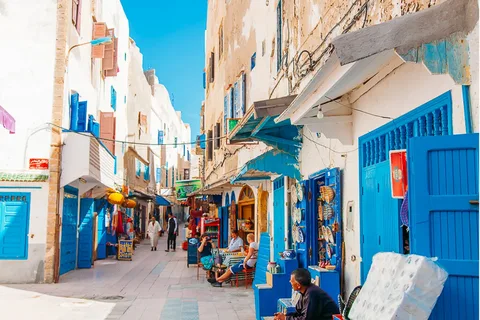
Entering Essaouira feels like stepping into a coastal painting. The city’s distinctive palette of white facades and vivid blue shutters creates an immediate visual identity. Unlike the labyrinthine medinas of larger Moroccan cities, Essaouira’s old town is relatively orderly, thanks to its 18th-century design influenced by European military architecture.
The heart of the city lies within the Medina of Essaouira, a UNESCO World Heritage Site known for its harmonious blend of Moroccan and European styles. Here, the blue-and-white aesthetic is more than decorative—it reflects the maritime spirit of the city. Seagulls circle overhead, and the scent of saltwater mingles with spices from nearby stalls.
Strolling through the medina in the late afternoon is one of the great pleasures of Day 4. Artisans display handcrafted thuya wood изделия, silver jewelry, woven textiles, and vibrant paintings. Essaouira has long attracted artists and musicians, and its creative atmosphere is palpable. Small galleries and workshops line the narrow streets, inviting exploration.
The Port and Ramparts: Atlantic Drama at Sunset
No visit to Essaouira is complete without a walk along the historic ramparts. The fortified sea walls, punctuated by bronze cannons, face the restless Atlantic. From here, the horizon appears endless. The sound of waves crashing against the rocks below provides a dramatic soundtrack, particularly as the sun begins to descend.
The fishing port nearby is equally compelling. Blue wooden boats cluster in the harbor, returning with the day’s catch. Vendors grill freshly caught sardines and seafood at simple open-air stalls, offering an authentic culinary experience. Dining here is informal yet unforgettable—fresh fish, seasoned simply, enjoyed within sight of the ocean that provided it.
As evening settles over Essaouira, the medina softens under golden light. Cafés fill with travelers and locals alike, sharing mint tea or freshly squeezed orange juice. The coastal breeze continues to move through the streets, carrying a sense of calm. Day 4 concludes not with hurried activity, but with relaxed immersion in one of Morocco’s most atmospheric seaside towns.
Day 5: Essaouira to Marrakech – Morning by the Sea and Return to the Red City
Day 5 begins at a slower rhythm. Essaouira mornings are tranquil, defined by soft ocean light and the steady presence of the Atlantic. Before beginning the return journey, it is worth dedicating time to simply experiencing the coast.
A Peaceful Atlantic Morning
The expansive beach of Essaouira stretches wide and open, inviting a quiet walk along the shoreline. Early in the day, the sand remains cool and relatively undisturbed. Locals jog, practice yoga, or ride horses along the water’s edge. The city behind you appears almost cinematic—white buildings set against a blue sky and rolling waves.
For those drawn to maritime activity, the port offers another perspective. Fishermen prepare their nets, boats depart in search of the day’s catch, and gulls compete for scraps. There is authenticity in these morning routines, a reminder that Essaouira remains a working coastal city rather than merely a tourist destination.
Breakfast in the medina provides a final sensory experience: msemen pancakes with honey, fresh bread dipped in olive oil, and strong Moroccan coffee. The pace is unhurried. Day 5 is not about distance; it is about transition.
The Drive Back: Coastal Calm to Urban Energy
The drive from Essaouira to Marrakech takes approximately three hours, making it one of the more comfortable travel days of the journey. As you leave the coast behind, the Atlantic air gradually gives way to inland warmth.
The road passes through argan forests and rolling countryside. Women’s cooperatives along the route produce argan oil using traditional techniques, and brief stops can offer insight into this important regional industry. The terrain becomes progressively drier, and the silhouette of Marrakech emerges as you approach.
Compared to Essaouira’s coastal serenity, Marrakech feels vibrant and intense. Known as the “Red City” for its terracotta-colored walls and buildings, it presents a striking contrast to the blue-and-white tones of the previous evening.
Re-Entering Marrakech: Energy and Contrast
Arriving back in Marrakech reintroduces you to one of Morocco’s most dynamic urban environments. The medina buzzes with activity, scooters weaving through narrow lanes, merchants calling out to passersby, and the aroma of spices filling the air. If your itinerary allows, the evening can be spent revisiting iconic spaces such as Jemaa el-Fnaa square, where storytellers, musicians, and food vendors create a living spectacle.
The return from Essaouira highlights the diversity of Morocco’s landscapes within a relatively short distance. In just a few hours, you move from Atlantic coastline to inland imperial city. The journey underscores how dramatically scenery, architecture, and atmosphere can shift across regions.
Reflection on Days 4 and 5
These two days form a beautifully balanced segment of a Moroccan itinerary. Day 4 emphasizes scenic travel and maritime charm: departing historic Taroudant, passing through modern Agadir, and culminating in the artistic coastal haven of Essaouira. The Atlantic road serves as both literal and symbolic passage—from desert tones to ocean blues.
Day 5, by contrast, is about gentle closure. A peaceful morning by the sea provides space for reflection before returning to the vibrant pulse of Marrakech. The manageable three-hour drive ensures that the transition feels smooth rather than rushed.
Together, these days capture Morocco’s remarkable diversity—ancient city walls, modern seaside boulevards, dramatic coastal highways, UNESCO-listed medinas, working fishing ports, and energetic imperial centers. From Taroudant’s calm beginnings to Marrakech’s vivid finale, the experience is layered, immersive, and memorable.
By combining scenic driving, cultural discovery, and coastal relaxation, Days 4 and 5 offer not only geographical movement but a shift in mood and perspective—an essential element of meaningful travel.
