



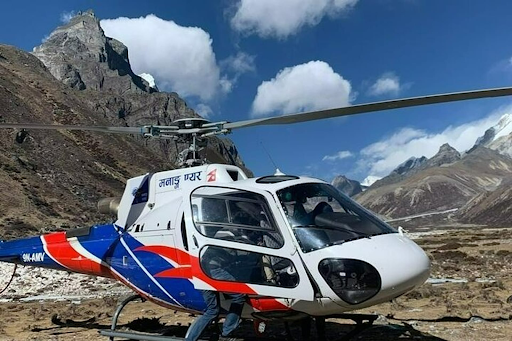
Nestled in the heart of Nepal, Kathmandu serves as the vibrant starting point for countless Himalayan adventures, while Lukla—home to the famed Tenzing-Hillary Airport—acts as the essential gateway to the Everest region. Traditionally, travelers relied on short fixed-wing flights or lengthy overland journeys followed by domestic hops, but these options often face notorious delays due to unpredictable mountain weather. Enter the Kathmandu to Lukla helicopter flight, a modern, reliable, and breathtaking alternative that transforms what could be a multi-day ordeal into a thrilling 40–50 minute aerial journey. This direct transfer not only saves precious time but also delivers unparalleled panoramic views of Nepal’s diverse landscapes, from lush valleys to snow-dusted peaks.
As of 2026, helicopter services have become increasingly popular among trekkers, families, business travelers, and those prioritizing comfort and efficiency. Operated by experienced companies using high-performance models like the Airbus H125, Bell 407, or Eurocopter AS350, these flights accommodate up to five passengers (plus the pilot) and offer flexibility that fixed-wing aircraft simply cannot match. Whether you’re heading to Everest Base Camp, Gokyo Lakes, or simply exploring the Khumbu, this helicopter option ensures a smoother start to your Himalayan experience.
The Flight Experience: From Takeoff to Touchdown
The adventure begins early in the morning at Kathmandu’s domestic helipad near Tribhuvan International Airport, with departures typically scheduled between 6:00 AM and 10:00 AM to capitalize on the clearest weather windows. After a comprehensive safety briefing covering altitude protocols, oxygen availability (if needed), and emergency procedures, passengers board the helicopter. As the rotors spin up, the craft lifts off smoothly, ascending over Kathmandu’s sprawling valley.
The route covers roughly 135–140 km, climbing steadily from Kathmandu’s 1,400 meters to Lukla’s 2,860 meters. Early segments showcase rolling green hills, terraced farmlands, and traditional villages like those in the Sindhupalchok and Dolakha districts. Soon, the terrain grows more dramatic: deep gorges, rushing rivers, and dense rhododendron forests give way to alpine meadows. On clear days, distant Himalayan giants begin to appear—Ama Dablam’s elegant pyramid shape, the towering Lhotse, and even glimpses of Everest itself shimmering on the horizon.
Pilots, many with thousands of high-altitude flight hours, provide live commentary, highlighting landmarks and sharing insights into Sherpa culture and mountaineering history. The flight’s low altitude allows for intimate views impossible from commercial jets, making it a scenic highlight in its own right.
The approach to Lukla is exhilarating. Tenzing-Hillary Airport, often called one of the world’s most challenging, features a short, sloped runway perched on a mountainside ledge, surrounded by steep drops. Helicopters, however, offer greater maneuverability than fixed-wing planes, enabling precise landings even in marginal conditions where airplanes might divert.
Upon arrival, passengers disembark amid the crisp mountain air, greeted by the bustling energy of Lukla town—prayer flags fluttering, teahouses welcoming trekkers, and distant views of snow-capped peaks. The entire one-way journey typically lasts 40–50 minutes, though weather can extend it slightly.
Best Time, Safety, and Practical Considerations
Spring (March–May) and autumn (September–November) remain the prime seasons for Kathmandu to Lukla helicopter flights. These periods bring stable weather, minimal wind, and exceptional visibility, reducing cancellation risks and maximizing scenic beauty. Mornings are ideal, as afternoon clouds and winds often build in the valleys.
Safety standards are rigorous. Nepal’s Civil Aviation Authority enforces strict guidelines for high-altitude operations, and reputable operators maintain modern fleets with regular maintenance. Helicopters excel in flexibility, often flying when fixed-wing services are grounded due to low visibility or crosswinds. Supplemental oxygen is available for sensitive passengers, though the short duration and moderate altitude gain minimize acute mountain sickness risks compared to longer treks.
Travelers should pack light—baggage limits hover around 15–20 kg per person, with extra fees for overweight items. Dress in layers for the temperature shift from Kathmandu’s mild mornings to Lukla’s cooler climate. Booking in advance is recommended, especially during peak trekking seasons, through trusted agencies that handle permits, transfers, and contingencies.
Cost Breakdown and Booking Options
Pricing in 2026 varies by option and demand. Shared (group-joining) flights, where seats are filled with other passengers, typically range from USD 450–650 per person one-way, offering the most affordable entry. Private charters, ideal for groups or those seeking customized timings and extra luggage, cost USD 2,500–3,200 per helicopter (up to five passengers).
Round-trip options often provide slight discounts, and some packages bundle ground transfers or brief Lukla stops. Always confirm inclusions like airport fees, insurance coverage, and potential weather-related rescheduling policies when booking.
Why Choose the Helicopter Option?
Beyond speed, the helicopter flight bypasses common fixed-wing frustrations: seasonal shifts to Ramechhap (adding 4–5 hours of driving), frequent cancellations, and long queues. It suits time-constrained visitors, elderly travelers, families with children, or anyone recovering from prior altitude exposure. Environmentally conscious operators increasingly offset emissions through local conservation projects, channeling tourism revenue back to Sherpa communities.
Conclusion
The Kathmandu to Lukla helicopter flight redefines access to the Everest region, merging efficiency, safety, and sheer wonder into one seamless experience. In under an hour, it bridges the urban pulse of Kathmandu with the serene, rugged beauty of the Khumbu, offering a front-row seat to some of Earth’s most iconic landscapes. For adventurers seeking to maximize their time amid the Himalayas without compromising on awe, this aerial transfer stands as an unparalleled choice—delivering not just a journey, but an unforgettable introduction to the world’s highest realm. Whether your path leads to Base Camp or beyond, starting with this flight ensures every moment counts in the thin, inspiring air of the mountains.
