



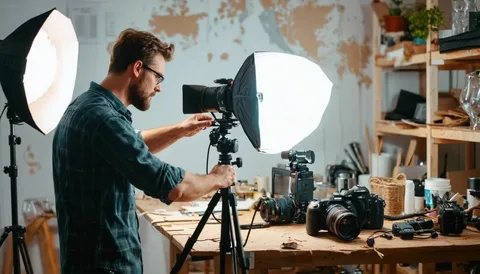
Begin by understanding the core principles that drive excellence in both photography and painting. Balancing the interplay of shadow and brightness can transform an ordinary scene into a captivating visual narrative. Experiment with contrasting tones; they not only shape mood but also guide the viewer’s attention to focal points within the artwork.
Explore the technical aspects of composition in both disciplines. Rule of thirds serves as a foundational guideline, ensuring objects are placed in a way that creates balance and movement. Pay attention to leading lines that draw the eye into the frame, enhancing the depth and dynamism of each piece.
Consider the emotional weight of color choices. Each hue carries its own significance and can evoke distinct feelings. In photography, natural light can drastically alter how colors are perceived; in painting, mixing pigments thoughtfully ensures a harmonious palette that resonates with the audience.
Experiment with your surroundings; both crafts thrive on the exploration of unique environments. Engage with diverse settings to infuse your work with fresh perspectives, allowing the essence of each location to inform your style and approach. This method will broaden your artistic horizons while deepening your understanding of both practices.
Understanding the Role of Time in Artistic Processes
Integrate structured routines to maximize productivity in your artistic endeavors. Allocate specific time blocks for experimentation, reflection, and execution of your work. This strategy enhances focus and minimizes distractions, allowing for deeper immersion into your craft.
Experiment with the duration of each creative session. Research shows that shorter, intense bursts of effort can yield remarkable results compared to prolonged, unfocused sessions. Aim for intervals of around 25 minutes followed by short breaks to maintain energy levels and creativity.
Establish a timeline when undertaking larger projects, breaking them down into manageable stages. This approach not only clarifies your goals but also provides milestones to celebrate progress, enhancing motivation and satisfaction throughout the artistic process.
Reflect regularly on your evolution. Set aside moments to assess your growth creatively over distinct periods. This reflection allows for a clearer understanding of your development and can influence future projects, leading to refined techniques and innovative approaches.
Consider the natural cycles associated with your medium. Whether through drying times, layering techniques, or the aging processes of materials, understanding these intervals can significantly influence the finish and character of your work. Plan activities around these cycles to achieve desired results.
Incorporate historical context into your practice by investigating how previous artists interacted with their time frames. Examining past methodologies can inspire contemporary techniques and help you to innovate while respecting the roots of your discipline.
Using Illumination to Elevate Artistic Endeavors in Visual Arts
Maximize the impact of visuals by strategically manipulating sources of illumination. Consider these approaches:
1. Experiment with Natural Sources
- Utilize morning or late afternoon sun for softer, more flattering tones.
- Observe how weather conditions change the quality of illumination; overcast days yield diffused light, ideal for portraits.
- Incorporate shadows and highlights from trees or buildings to create dynamic compositions.
2. Incorporate Artificial Techniques
- Employ reflectors to bounce illumination and fill in shadows for a balanced effect.
- Utilize colored gels to shift the mood of a scene, influencing emotion and viewer perception.
- Experiment with backlighting to create silhouettes, adding intrigue and drama to your work.
Pay attention to the interplay of varying intensities. Harsh or soft illumination can dramatically alter the perception of depth and form. Observing how different conditions enhance visual storytelling is crucial.
For further exploration of craftsmanship and the intricacies of watchmaking, visit Wrist Chronicles.
Exploring Techniques in Photography and Painting
Employ the rule of thirds to shape composition effectively. Position focal points along the gridlines or intersections to draw the viewer’s attention. This guideline helps create a natural flow in the artwork, whether it’s a photograph capturing a moment or a canvas depicting a scene.
Utilizing Vanishing Points
In both mediums, establishing vanishing points allows artists to create a sense of depth. For photographers, placing leading lines that converge to a single point draws the eye inward, enhancing the three-dimensional feel of an image. Painters benefit from this technique by applying it to architectural elements, guiding viewers through the composition.
Atmospheric Effects
Integrate atmospheric techniques like aerial perspective, where distance blurs forms and fades colors. In photography, leverage this by using filters or adjusting focus. In painting, apply layers of translucent washes to create a sense of distance. These strategies add realism and enhance the illusion of space.
Experiment with angles and viewpoints. High or low perspectives can alter the viewer’s interpretation of a subject. Photographers often use elevated positions to showcase expansive environments, while painters may choose unconventional angles to provoke thought or emotion.
Texture can also influence how elements are perceived. Incorporating varying brush strokes or manipulation of focus can create visual interest. Use sharp details in the foreground and softer elements in the background to guide the viewer’s gaze throughout the piece.
Lastly, practice is key. Regularly explore these various approaches to refine skills in elaborating scenes. The more one experiments within these frameworks, the better one understands their effects and applications across both visual arts.
Practical Exercises for Mastering Time and Light in Your Craft
To deepen your understanding, set aside a dedicated time block each week to study shadows. Choose a small object, like a fruit, and place it in different settings to observe how varying angles affect its shadow. Document your findings through sketches or photographs to compare the nuances.
Shadow and Movement Analysis
Incorporate movement into your practice by capturing a sequence of a subject in motion. Use a slow shutter speed in photography to create dynamic blurs. If painting, capture a series of poses to represent motion across multiple canvases. Analyze how this impacts the viewer’s perception.
Color Temperature Exploration
Experiment with color temperature in your work by using filters or adjusting settings in your software. Create two pieces of the same scene, one under warmer tones (like late afternoon sun) and one in cooler tones (like early twilight). Compare emotional responses to each version. This exercise sharpens your eye for mood transmission through hue.
Case Studies: Artists Who Transform Time and Light into Masterpieces
Explore the work of specific artists who have mastered the manipulation of moments and illumination, creating evocative pieces. One notable figure is Claude Monet, whose series “Haystacks” captures the changing conditions of daylight. By painting the same subject under different skies, he showcases how variations in atmosphere can alter perception and tone.
James Turrell takes an innovative approach with his installations that engage viewers in a dynamic experience of color and form. His piece “Altermodern” transforms a space into an immersive environment, inviting the observer to interact with shifting hues that redefine the perception of space and architecture.
In photography, Ansel Adams remains a pivotal influence. His meticulous control over exposure and development techniques highlights the grandeur of natural scenes, using contrast and shade to evoke emotion. Adams’ iconic work emphasizes that every detail in composition plays a critical role in visual storytelling.
Another remarkable artist is Vincent van Gogh, whose swirling brush strokes in “Starry Night” create a sense of movement that infuses energy into the scene. The way he used contrasting colors not just represents, but stimulates the viewer’s emotions through bold expressiveness.
Modern artists like Olafur Eliasson employ technology to engage the audience with the natural world. His installations often involve mirrors and light projections, altering viewers’ spatial awareness and encouraging contemplation about their place within the environment.
Combining theoretical insights and practical applications can enhance one’s mastery in this area. For those seeking to experiment further, consider referring to resources like Cameras Review for insights on photographic techniques, or LensGearPro for essential tools to refine your skills. Learning from these artists offers pathways to explore new dimensions within your work.
Q&A:
How do time and light influence the creative process in traditional crafts?
Time and light play a significant role in the creative process of traditional crafts. Artists often rely on natural light to enhance their work, as it affects color perception and detail visibility. For instance, craftsmen might choose specific times of day to work to capture the perfect light conditions. Moreover, the concept of time can influence the evolution of techniques and the pace at which an artist develops their skills. This interplay between time spent honing a craft and the quality of light available can lead to unique artistic expressions that reflect both the environment and the individual’s journey.
What are some examples of traditional crafts that benefit from the interplay of time and perspective?
Several traditional crafts benefit from the interplay of time and perspective. For example, pottery often requires a deep understanding of light to create pieces that showcase various glazes effectively. The changing light throughout the day can affect how colors and textures are perceived, influencing the final product. Similarly, woodworking can be seen in different lights at different times, which may impact how grain and finish appear. Artists in these fields often develop a keen awareness of their surroundings over time, learning to use natural light and their own internal perspective to enhance their creations. Such experiences cultivate a deeper connection to their craft and the materials they work with.
