



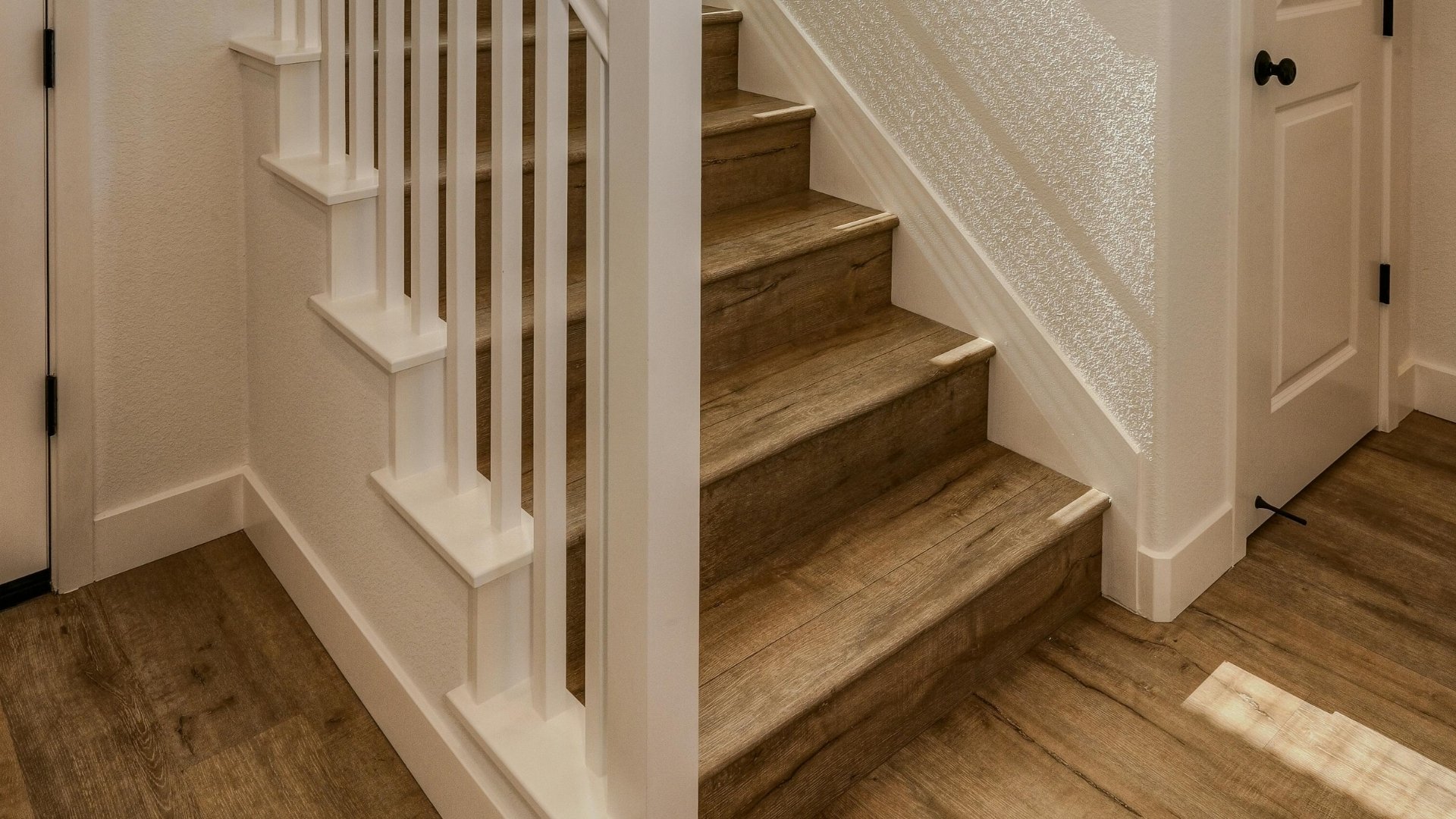
Every flooring professional has experienced the version of a project that almost made it. A hardwood installation executed to a high standard throughout — species selected carefully, installation quality consistent, finish coordinated with the surrounding interior — that falls short of its potential at the staircase. The floor reads beautifully across the main living areas. The staircase, specified and installed as a secondary consideration, undermines the cohesion of the entire project from the most visible transitional element in the home. For flooring dealers, remodeling contractors, homebuilders, and design professionals who want every hardwood installation to resolve completely rather than almost completely, stair treads are the specification decision that most consistently determines whether a project achieves that standard — and the one most consistently underweighted in the project scoping and sales process.
Why the Staircase Is the Most Consequential Surface in a Hardwood Interior
The staircase occupies a unique position in the visual hierarchy of a hardwood interior. It is the vertical connector between floors — the surface that a visitor encounters at the threshold of the home and that frames the transition between every level of the living space. Unlike horizontal flooring surfaces that are experienced primarily underfoot and read as background material in the context of furniture, art, and architectural features, the staircase presents its tread surfaces at eye level from multiple vantage points simultaneously.
A tread surface viewed from the base of a staircase is seen at close to a forty-five degree angle — a viewing geometry that reveals surface texture, finish quality, and material character with a clarity that horizontal floor surfaces rarely achieve in normal occupancy conditions. Grain figure, finish sheen, edge profile, and the precision of the nosing detail are all visible at this angle in a way that makes the staircase the most critically observed hardwood surface in the interior.
This visual prominence makes the staircase tread specification the single most consequential material decision in a hardwood interior project — and the one that most directly expresses the overall quality standard of the installation to anyone who enters the space.
The Performance Demands That Separate Stair Treads From Flooring
Stair treads are hardwood flooring products in the same sense that a racing tyre is a road tyre — related in material and general function, but engineered to a different performance specification that reflects fundamentally different operational demands.
The wear pattern on a stair tread is concentrated, directional, and relentless in a way that horizontal floor surfaces never experience. Every user of the staircase places their foot in approximately the same location on each tread — the front third of the tread surface, near the nosing — with a heel strike force that exceeds the distributed load of normal floor traffic. A tread surface that handles this concentrated wear pattern across years of residential use without significant surface degradation requires hardness, finish durability, and structural integrity specifications that exceed what standard hardwood flooring products deliver.
Nosing geometry is a performance specification unique to stair treads with no direct equivalent in flooring products. The nosing — the front edge of the tread that overhangs the riser below — must be dimensioned and profiled to meet building code requirements for overhang and profile geometry while providing a durable, slip-resistant leading edge that sustains its integrity under the heel strike loads concentrated at that location across the service life of the installation.
Dimensional stability across the full width of the tread is a structural specification that flooring products address through installation methodology — floating, glued, or nailed installations that accommodate seasonal movement across multiple boards. A stair tread spans the full width of the staircase opening as a single piece, and the dimensional movement of that piece across seasonal moisture cycling must be managed through species selection, sawn profile, and moisture content specification rather than installation technique.
Species Selection and Its Practical Implications
The species selection decision for stair treads operates across the same aesthetic and performance criteria as flooring specification — with the additional performance demands of the stair environment adding weight to the hardness and dimensional stability variables that might be secondary considerations in a flooring context.
White oak has become the dominant specification in premium residential stair tread applications for reasons that align precisely with the performance demands of the stair environment. Its Janka hardness of 1,360 delivers the wear resistance that concentrated tread traffic demands across a multi-decade service life. Its closed grain structure accepts stain with exceptional consistency and uniformity — the property that makes custom colour matching across a full flight of treads reliably achievable. Its dimensional stability under seasonal moisture cycling reduces the risk of edge lifting, surface cracking, and joint opening that dimensional movement in a single-piece tread spanning a wide staircase opening can produce.
Hard maple at 1,450 Janka hardness exceeds white oak in raw wear resistance but presents staining challenges — its tight, uniform grain resists penetration in ways that produce blotchy, inconsistent results with many stain formulations and require specialist finishing approaches that add complexity and cost to the installation process. For installations where a natural or lightly toned finish is the design intent, maple is a viable and high-performing specification. For custom stain colours that require consistent penetration across the full tread width, white oak is the more reliable choice.
Hickory at 1,820 Janka hardness is the performance leader among domestic hardwood species and a specification with strong appeal in rustic, traditional, and country interior styles where its dramatic grain variation and natural colour contrast are design assets rather than inconsistencies to manage. The same grain variation that makes hickory visually distinctive makes consistent stain matching across a full flight of treads technically demanding — a consideration that is worth raising in the specification conversation with clients whose design intent requires tight colour consistency.
The Prefinished Specification Advantage in Trade Applications
For flooring dealers and remodeling contractors building stair tread supply into a standard project offering, the operational case for prefinished treads is compelling enough to make it the default specification recommendation in the majority of residential renovation applications.
Site-finishing stair treads requires the full scope of the finishing trade — surface preparation, stain application and colour verification, sealer coats, finish coats, and the cure period between each application stage that extends the out-of-service period of the staircase and the overall project timeline. In occupied residential renovations, this process creates client disruption that compounds across the full finishing schedule and frequently produces friction that the quality of the finished result does not entirely offset.
Prefinished stair treads resolve every element of this complexity simultaneously. Factory-applied finish systems — UV-cured aluminum oxide formulations at the premium tier — deliver hardness and abrasion resistance that consistently exceed site-applied finishes in occupied residential conditions. The staircase returns to service immediately after installation. The finish result is consistent across every tread in the flight without the colour variation and surface inconsistency that stain application in field conditions introduces. And the project scope and timeline are defined and predictable from the point of product delivery rather than subject to the variables of site-finishing conditions and scheduling.
The finish coordination requirement — aligning the prefinished tread specification with the prefinished flooring product in the surrounding rooms — is the specification detail that demands the most attention when recommending prefinished treads. Working with a supplier whose prefinished tread range is developed in deliberate relationship with the flooring products most commonly specified in the premium residential market provides the finish matching capability that makes prefinished treads a complete specification solution rather than a scheduling convenience that compromises visual integration.
Wood Stair Co supplies hardwood stair treads to flooring dealers, remodeling contractors, homebuilders, and design professionals — with a species range, sawn profile offering, and prefinished finish catalogue built around the specification requirements of premium residential stair installations and the operational needs of trade professionals who require consistent product quality and reliable availability across the full project schedule.
