



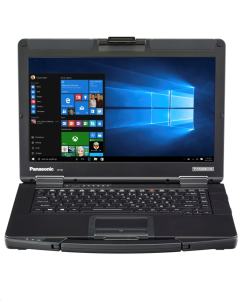
Few categories of computing hardware offer the value proposition that refurbished rugged equipment does — and within the rugged segment, no device makes that argument more convincingly than the Panasonic Toughbook. A refurbished Toughbook brings military-grade durability engineering and field-proven reliability at a significant reduction from the cost of a new unit, while retaining the structural and functional characteristics that made it worth that cost to begin with. For organizations and professionals operating in environments where standard computing hardware fails, that combination represents one of the most defensible value propositions in enterprise hardware procurement today.
What Separates a Toughbook from Standard Computing Hardware
The Panasonic Toughbook is not a conventional laptop with rugged marketing applied to it — it is built to a fundamentally different engineering specification that begins with the chassis and extends through every design decision made during its development.
Toughbook devices are engineered and certified to MIL-STD-810 military standards, which govern resistance to shock and vibration, extreme temperature ranges, humidity exposure, altitude variation, and in many models, ingress protection against dust and liquid. The chassis uses reinforced magnesium alloy construction rather than the plastic or thin aluminum typical of consumer and business hardware. Displays are optically bonded to reduce internal condensation and improve readability in outdoor operating conditions. Internal components are mounted to survive the vibration profiles of vehicle-deployed operation — a use case that conventional laptops are not designed, built, or tested to withstand.
Why the Refurbished Argument Is Uniquely Strong for Toughbooks
The case for buying refurbished is more compelling for Toughbooks than for nearly any other category of computing hardware, and the reasoning flows directly from what these devices were built to do in the first place.
Standard commercial laptops reach the end of their useful physical life well before their electronics fail — enclosures crack, hinges fail, and keyboards wear through under the pressures of ordinary daily use. Refurbished consumer or business hardware, even at modest ages, typically carries the visible and structural effects of that accumulated wear.
A Toughbook was engineered to absorb precisely the kind of treatment that destroys standard hardware. A unit that has completed several years of active field deployment may show surface cosmetic wear while retaining complete chassis integrity, full operational capability, and the same environmental protection it carried when new. The engineering that justified the original purchase price does not fade after the first deployment cycle — it is built into the device’s fundamental construction, permanently.
Who Benefits Most from Refurbished Toughbooks
The industries that depend most heavily on reliable field computing are also those with the strongest operational and financial reasons to consider the refurbished market seriously.
Public safety and law enforcement agencies are among the heaviest Toughbook users, deploying them as vehicle-mounted mobile data terminals and field reporting platforms. Equipping entire vehicle fleets with certified refurbished units delivers meaningful cost reduction without sacrificing the operational reliability these environments require. Field service teams and utilities technicians working in outdoor and industrial environments face identical dynamics. Military contractors, construction site managers, mobile healthcare providers, and transportation operators all share a common requirement — hardware that performs without failure in demanding conditions — and a common interest in meeting that requirement at a cost that remains sustainable across replacement cycles.
What to Evaluate Before Purchasing
Not all refurbished hardware is equivalent, and the quality of the refurbishment process determines how any given unit performs in the field over its next service cycle.
Prioritize units that have been professionally inspected, functionally tested, and physically reconditioned rather than simply factory-reset and relisted. Key evaluation points include structural integrity of the chassis — particularly at the hinge assembly and port cover attachments, which absorb disproportionate wear over time — display condition and brightness retention, battery capacity relative to original specification, and whether the unit’s MIL-STD-810 certifications are verifiable. On ingress-protected models, port covers and rubber sealing elements must be present and fully functional; these are load-bearing components for the device’s environmental rating, not cosmetic features.
Post-purchase warranty coverage from the selling dealer is the clearest available signal of refurbishment quality. A seller confident in their process backs it with meaningful terms.
Certifications That Inform a Purchasing Decision
Two specifications appear consistently in Toughbook listings and carry direct practical implications worth understanding before committing to a purchase.
MIL-STD-810 governs environmental and mechanical durability across a defined set of test categories — shock, vibration, temperature extremes, humidity, altitude, and others. The specific test protocols a unit has been certified against should be clearly disclosed by any credible seller, as certification breadth varies across models and production generations.
IP ratings specify protection against solid particle and liquid ingress. IP65, common across many Toughbook models, indicates complete dust exclusion and resistance to water jets from any direction. For deployments in wet environments or high-particulate field conditions, confirming the IP rating of any unit under consideration — and verifying that the refurbishment process has not compromised the seals that sustain it — is a necessary step before purchase.
Hardware Built to Last Beyond Its First Owner
A refurbished Toughbook is not a compromise position. It is a purchase decision grounded in the recognition that hardware built to military durability standards retains genuine and demonstrable value through multiple service cycles. For professionals and organizations whose work takes place in conditions that standard laptops cannot tolerate, it is the most practical route to durable, dependable field computing at a cost that reflects operational reality.
Tough Rugged Laptops specializes in professionally refurbished Toughbooks and rugged computing hardware, inspected, tested, and certified for real-world field deployment demands. Visit their website to explore current inventory and find the right device for your environment and operational requirements.
